Servicemate On-Demand Service Finder App
A mobile-first service discovery platform where users find, book, and track local service providers in real time — cleaners, plumbers, electricians — with live job tracking and zero double bookings.
👤 Service Seekers
Browse providers by category, location, rating, and availability. Book instantly, track your provider live on a map, and pay in-app after the job is done.
🔧 Service Providers
Receive job requests, manage your calendar, navigate to bookings with live routing, update job status in real time, and build a verified review profile.
📊 Admin Portal
Web-based marketplace operations — provider onboarding, dispute resolution, analytics, payout management, and platform configuration without engineering support.
🔒 Trust & Verification
Every provider is ID-verified before going live. Reviews are booking-gated — only confirmed customers who completed a job can leave a review.

Three distinct interfaces. One shared data model.
Servicemate operates as a two-sided marketplace with a web-based operator admin — each interface with distinct UX requirements, all backed by the same real-time event layer.
The architectural principle: Every module shares the same data model, the same authentication context, and the same real-time event layer. The seeker app, provider app, and web admin portal are three different views into a single consistent system — not three separately maintained applications.
Servicemate is an on-demand service marketplace connecting homeowners with local service providers — cleaners, plumbers, electricians, carpenters, and other skilled trades. The platform needed to serve three fundamentally different user types simultaneously: consumers booking services, providers managing their business, and marketplace operators overseeing platform health.
NextGen Innovations built the complete platform in 3 months: a React Native app with dual-mode seeker and provider interfaces, a Node.js + PostgreSQL backend with real-time Socket.io job tracking, a PostGIS location engine for sub-2-second provider discovery, and a React web admin portal for marketplace operations — all running on a shared data model with JWT + RBAC authentication.
Every critical marketplace trust problem was addressed at the architecture level: transactional slot locking prevents double bookings, booking-gated reviews ensure only verified customers can rate providers, and ID verification gates provider onboarding before any provider appears in search results.
A marketplace is three products simultaneously.
Every feature had to work for the seeker, the provider, and the operator — simultaneously, in real time, with no inconsistencies between interfaces. That is a different engineering problem than building a single-audience application.
Appointment Scheduling Complexity
A provider’s calendar has real-time availability that changes as bookings come in. Two customers booking the same provider for the same time slot — with only one slot available — cannot both succeed. Standard form-submit booking flows do not handle this.
Real-Time Field Team Coordination
Once a job is confirmed, the seeker needs to know where their provider is and when they will arrive. The provider needs to know the exact address, job details, and any last-minute updates. Standard REST APIs create unacceptable polling overhead for live location tracking.
True Multi-Tenancy with Custom Config
Multiple operator accounts needed to customise their marketplace behaviour — service categories, pricing structures, geographic zones — without impacting other operators sharing the same infrastructure.
End-to-End Billing Integration
Service marketplace billing is complex: dynamic pricing by service type, duration, and provider tier, with platform commission splits, payout scheduling, and dispute handling — all needing to be reconcilable for operator financial reporting.
Meaningful Business Analytics
The operator admin portal needed more than counts and totals. Marketplace health requires understanding provider utilisation, booking completion rates, cancellation patterns, and geographic demand distribution — across configurable time windows.
Three Distinct User Interface Modes
The seeker, provider, and admin interfaces are not just different screens — they are different mental models, different information densities, different interaction patterns. A single-view architecture would force UX compromises on all three audiences simultaneously.
Real-time. Transactional. Built for trust.
Every marketplace fails on trust or reliability. Servicemate was engineered specifically to solve both — transactional booking integrity and real-time coordination — without compromising on either.
Location-Aware Provider Discovery with PostGIS
Provider search runs PostGIS ST_DWithin spatial queries against real-time provider locations, filtered by service category, availability, rating, and custom operator configuration. Results include distance, estimated arrival, and availability windows — returned in under 2 seconds from the moment the customer submits a search.
Transactional Booking with Slot Locking
When a customer selects a time slot, the system places a 3-minute optimistic lock on that slot within a PostgreSQL transaction. If payment and booking confirmation complete within the window, the slot is reserved. If two customers select the same slot simultaneously, exactly one succeeds and the other is returned to slot selection with an accurate availability update — before any payment is attempted.
Real-Time Job Tracking via WebSocket
Once a booking is confirmed, a shared Socket.io room opens for that job — the seeker, the provider, and the operator all receive events as the job status progresses: en_route, arrived, in_progress, completed. Provider GPS location is broadcast to the seeker’s map every 8 seconds while the provider is en route. FCM push notifications serve as a fallback for users whose app is in the background.
Provider Verification and Trust Layer
Providers submit government ID and professional certification during onboarding. The verification pipeline validates document authenticity and marks the provider as verified in the system — the verified badge only appears on the public profile after this process completes. Reviews are booking-gated: the review submission endpoint validates that a confirmed, completed booking exists between the reviewer and the provider before accepting the review.
Dual-View React Native App for Seekers and Providers
A single React Native codebase contains both the seeker and provider interfaces, with role-based UI rendering controlled by the authentication context. The seeker interface is optimised for discovery and booking. The provider interface is optimised for job management, navigation, and calendar management. Both share the same real-time event layer — a single WebSocket connection handles job updates for both roles.
Web Admin Portal for Marketplace Operations
A React portal provides the operator team with full marketplace visibility and control: provider onboarding approval, booking dispute management, payout scheduling, geographic analytics, service category management, and promotional pricing configuration. Every operation in the admin portal is available to the operator team without any engineering involvement — including bulk actions across providers, bookings, and payouts.
Node.js, React Native, and PostgreSQL. Three engineers, three months, three platforms.
The stack was chosen for the real-time coordination requirements of a service marketplace — Socket.io for live tracking, PostGIS for spatial queries, PostgreSQL transactions for booking integrity.
Shared codebase for the seeker and provider apps. Role-based UI rendering means one React Native project delivers two fully distinct user experiences on both platforms.
Separate React application for marketplace operators — provider onboarding, dispute resolution, analytics, payout management, and platform configuration.
Managed Expo workflow for fast development iterations, OTA update capability, and consistent native module access across iOS and Android without separate native builds for every change.
RESTful API serving all three client platforms — seeker and provider mobile apps, and the web admin portal. Single data layer, single business logic, consistent API contracts.
Real-time job status events and provider GPS broadcasts. Each confirmed booking creates a dedicated Socket.io room. Seekers, providers, and operators all receive live updates as job status changes.
Firebase Cloud Messaging for Android and Apple Push Notification Service for iOS. Push notifications deliver booking confirmations, provider arrival alerts, and job completion events to background and closed app states.
Core data store for bookings, providers, seekers, reviews, and financial records. PostGIS enables sub-2-second spatial provider discovery queries. Row-Level Security enforces operator data isolation at the database layer.
MongoDB for flexible document storage: provider portfolios, operational logs, and audit records where schema flexibility matters. S3 for all document and image storage — provider photos, ID verification uploads, and job completion evidence.
JSON Web Tokens with role-based access control govern what each user type can see and do — a seeker cannot view provider financials, a provider cannot access the admin portal. Docker containerisation ensures consistent environments from local development to production.
A small team that knew their domain.
Servicemate was built by 3 engineers supported by a PM, a designer, and a QA engineer. No engineers were generalists learning marketplace architecture on this project — every person had prior experience with their specific domain of the build.
Complete backend: Node.js + Express API, PostgreSQL with PostGIS schema, booking transaction logic with slot locking, Socket.io real-time layer, JWT + RBAC authentication, provider verification pipeline, FCM + APNs push notification integration, Docker containerisation, and AWS deployment. Senior technical decision-maker for the platform.
Sprint planning, milestone tracking, and client communication across the 3-month build. Managed the two-sided marketplace scope to avoid scope creep across the three platform surfaces.
Distinct Figma design systems for all three interfaces — seeker app, provider app, and web admin portal — with shared component patterns to ensure visual cohesion across surfaces.
Billing and payout system, analytics data pipeline, dispute resolution workflows, bulk admin operations, and advanced PostGIS spatial query optimisation for peak-load provider discovery.
React Native seeker and provider app UI, role-based rendering logic, Socket.io client integration, live map tracking interface, booking flows, and React web admin portal.
Native iOS and Android modules for background location, push notification deep linking, camera access for document uploads, and performance profiling across device tiers.
End-to-end test scenarios across all three platforms — concurrent booking integrity tests (two users, one slot), real-time tracking latency validation, push notification delivery reliability, review gating verification, and full regression across seeker, provider, and admin flows before each weekly release.
What Servicemate achieved on launch.
Servicemate wasn’t a minimum viable product — it was a production-ready marketplace with full booking integrity, real-time coordination, and provider trust mechanisms active from day one.
Platforms live simultaneously — iOS, Android, Web Admin
Provider match from search to results — PostGIS spatial queries
Double bookings since launch — transactional slot locking
Engineers, 3 months — full two-sided marketplace
Real-time GPS tracking — active from booking confirmation
Booking-gated reviews — only verified customers can rate
All three platform surfaces — seeker iOS app, seeker Android app, provider iOS app, provider Android app, and web admin portal — launched simultaneously on the same day, all backed by the same data layer and real-time event system.
PostgreSQL transactional slot locking with 3-minute expiry has maintained complete booking integrity since launch. No provider has ever been double-booked. No customer has ever been told on arrival that their booking conflicted with another customer.
Provider GPS updates broadcast to seekers every 8 seconds — frequent enough to show meaningful map movement, infrequent enough to avoid significant battery impact on the provider’s device during a full day of jobs.
Booking-gated reviews and ID verification badges are visible on every provider profile. First-time platform visitors can immediately distinguish verified, reviewed providers from unverified ones — reducing the trust barrier that typically prevents first bookings on new marketplace platforms.
A marketplace built to win trust and keep it.
Servicemate was never meant to be a portfolio demo. It was built to operate as a live, revenue-generating marketplace — and every engineering decision reflects that. Booking integrity, provider trust, real-time coordination, and operator autonomy were not features to be added after launch. They were requirements baked into the architecture from the first schema design.
Three engineers delivered three production-quality platform surfaces in three months. No shortcuts were taken on data integrity, no corners were cut on user trust, and no operator capabilities were deferred for a “v2.” The platform launched complete.
More Work We Are Proud Of
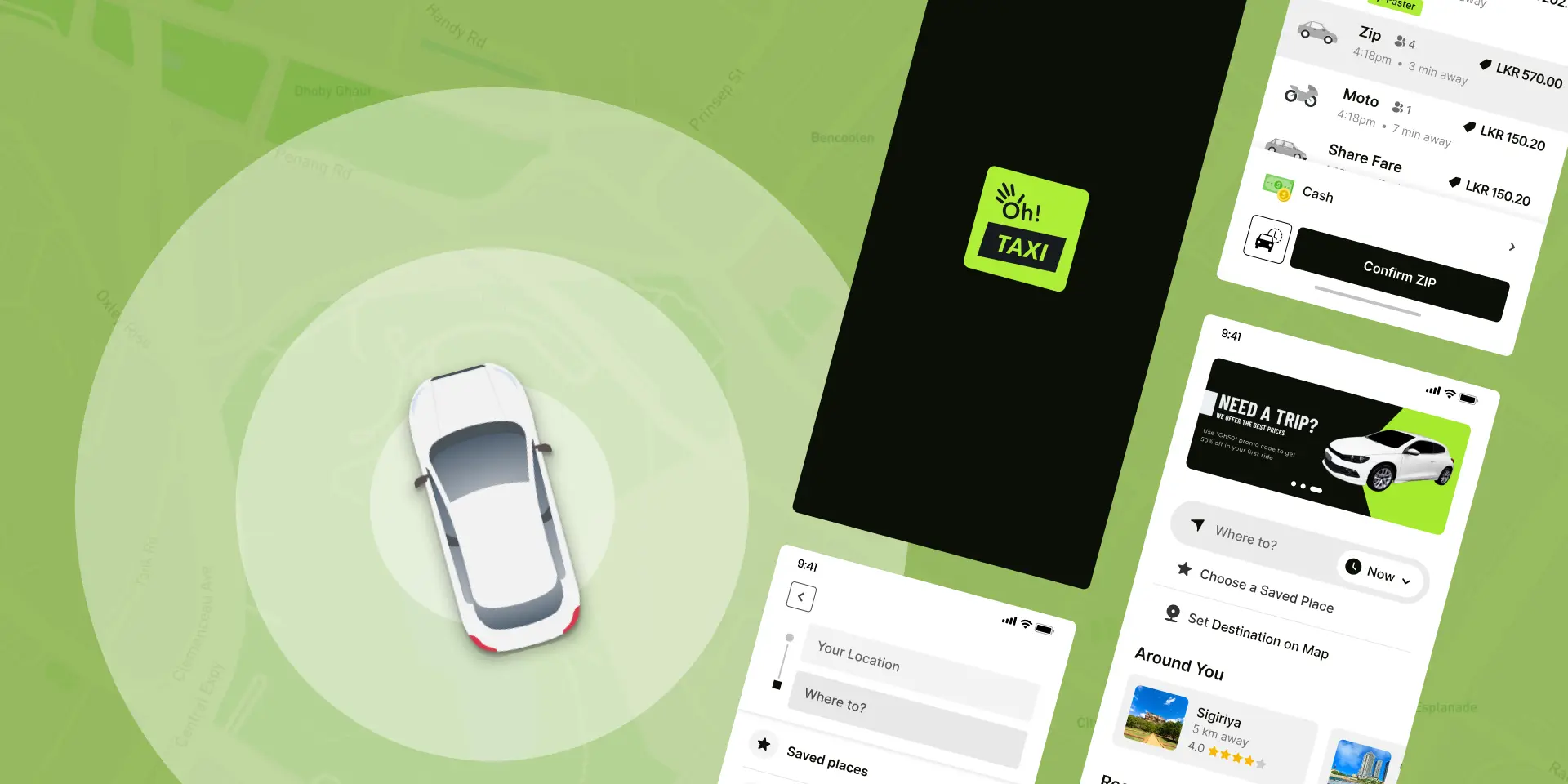
Oh! Ride — SaaS Ride-Hailing Platform
Sri Lanka’s first zero-commission ride-hailing platform. 8 microservices, ML dynamic pricing, live 2+ years with zero major outages.
Read Case Study →
Mave — B2B Chat & Cashflow Platform
Real-time business communication merged with automatic cashflow intelligence. Delivered in 2 months with NLP transaction detection.
Read Case Study →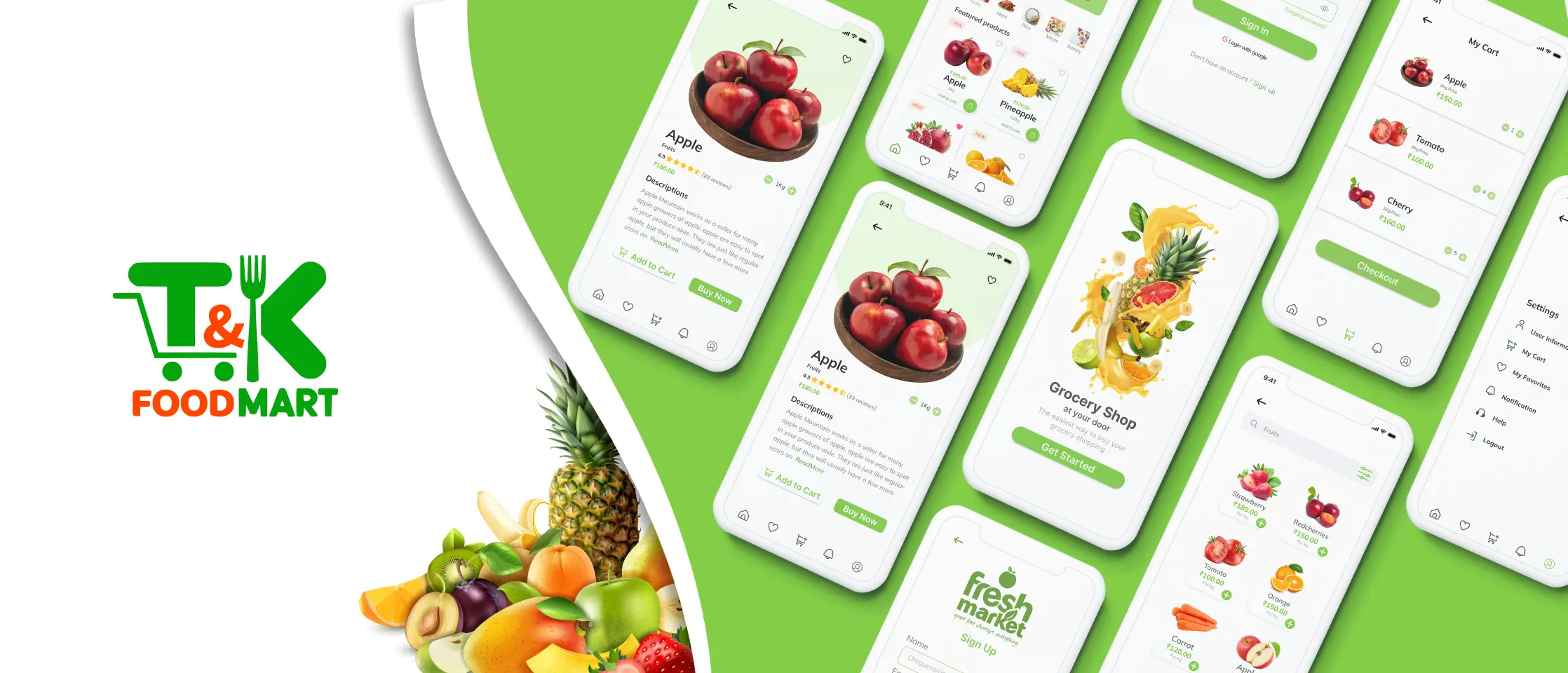
T & K — Cross-Platform E-Commerce
One codebase, three platforms. Real-time inventory, dual payment gateways, personalised recommendations. Built in 2 months by 2 engineers.
Read Case Study →Ready to build something exceptional?
Every project we take on is treated as if it were our own business. If you have an idea, a problem, or a deadline — let’s talk.