Oh! Ride Sri Lanka’s First SaaS Ride-Hailing Platform
Drivers pay a flat monthly fee and keep 100% of every fare. Built from zero — 8 microservices, React Native, Spring Boot, Node.js, Python ML, Apache Kafka — live for 2+ years with zero major outages.
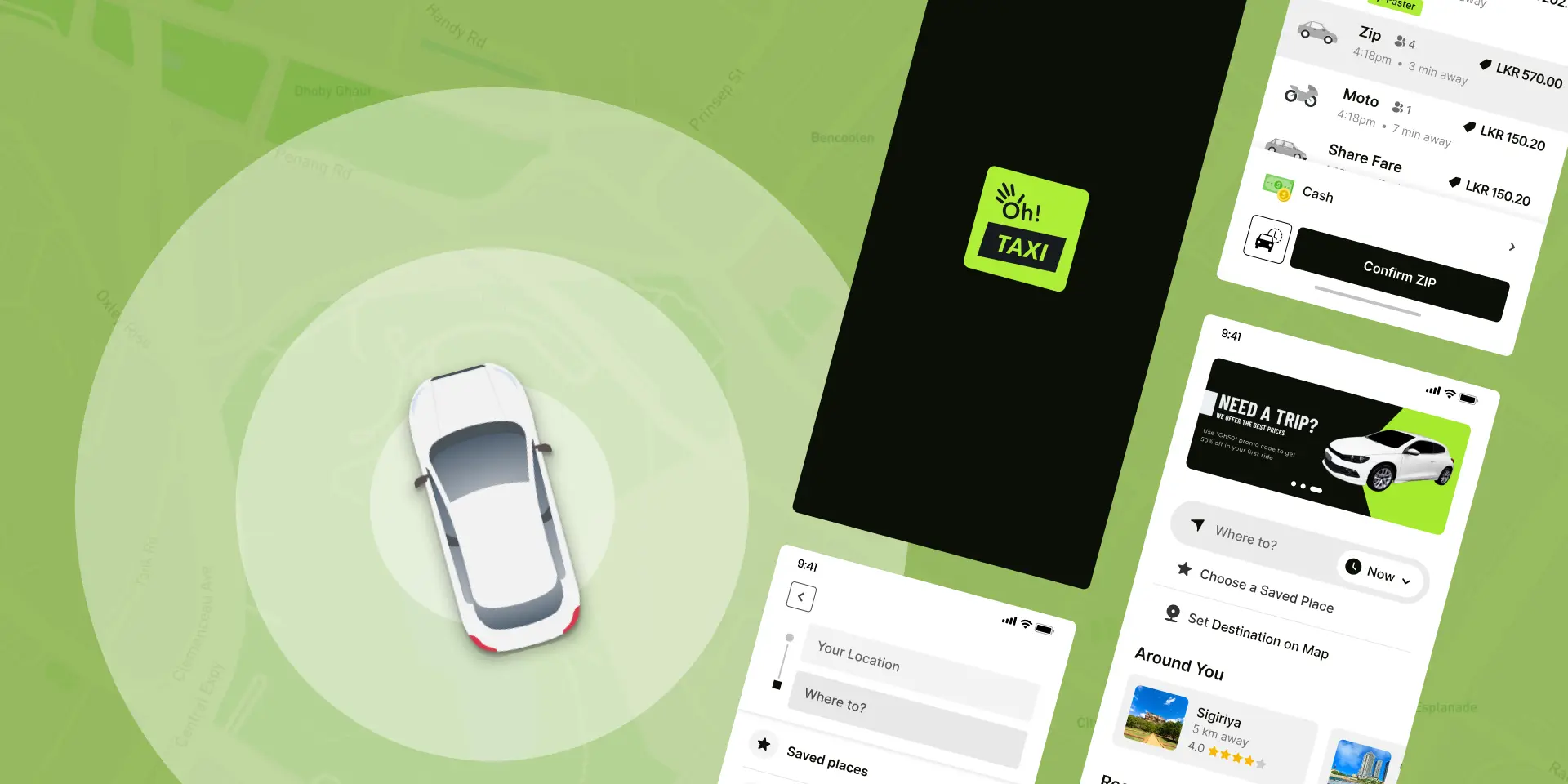
Reimagining ride hailing with a fairer model.
A complete platform ecosystem built from zero — every service designed, built, and deployed within a single 12-month sprint.
Oh! Ride is a full-scale ride-hailing platform built by NextGen Innovations for OXHorn — designed to fundamentally change how ride-hailing works in Sri Lanka. Unlike existing platforms that charge drivers a 15–30% commission on every trip, Oh! Ride introduced a SaaS subscription model: drivers pay a flat monthly fee and keep 100% of every fare they earn.
The platform was engineered from the ground up — 8 independent microservices, 6 independently deployed frontend modules, real-time GPS tracking via WebSocket and Redis GEO, ML-powered dynamic pricing using XGBoost, automated driver verification combining OpenCV face liveness and Tesseract OCR, and a fully white-label operator admin portal built with React 18 Module Federation.
Every layer was designed to scale to thousands of concurrent drivers and rides without performance degradation. The project spanned 12 months and required 11 specialists working in parallel across backend, mobile, ML, frontend, and infrastructure.
Oh! Ride has been live in production for over 2 years — zero major outages, zero downtime deployments. That is the standard we hold on every project we take on.
Building an entire ecosystem from zero.
No prior codebase. No legacy system to extend. Every service designed and integrated in parallel within a single 12-month window.
Building from Absolute Zero
Every service — auth, trips, real-time location, billing, ML pricing, and driver verification — had to be designed and integrated in parallel with no legacy fallback and zero existing infrastructure.
Real-Time GPS at Scale
Sub-second position updates for hundreds of concurrent rides. Standard REST polling creates server overload. The platform needed persistent WebSocket connections with Redis GEO for thousands of simultaneous driver positions.
Dynamic Pricing Without Bias
Flat-rate fares are unfair at peak demand. The platform needed an intelligent pricing engine adjusting fares on real-time signals without any manual operator intervention.
Driver Identity Verification
Onboarding unverified drivers is a safety and legal risk. The system needed face liveness detection, NIC and licence OCR, and cross-reference validation — all without manual review per applicant.
Microservices Independence
A monolith would not scale to the needed load. Each domain needed independent deployability, its own failure isolation, and strict API contracts enforced from day one.
Multi-Team Admin Portal
Six functional areas needed separate team ownership and deployment cycles without risking the entire operator portal — fleet, billing, analytics, driver approvals, support, and configuration.
Production-grade engineering for real-world scale.
Cloud-native. Event-driven. Every engineering decision made for long-term stability and operational independence.
Real-Time Location Engine
Node.js Fastify manages persistent WebSocket connections streaming driver positions every 2 seconds. Redis GEO commands execute radius-based nearest-driver queries in under 5ms. A single node handles 2,000+ concurrent driver connections — the Kubernetes cluster scales horizontally for full fleet load.
ML Dynamic Pricing with XGBoost
A standalone Python FastAPI microservice runs an XGBoost model trained on historical trip data, demand patterns, weather signals, and time-of-day inputs. The model retrains weekly on fresh production data to stay accurate as demand patterns evolve.
Computer Vision Driver Verification
A Python service combines OpenCV face liveness detection with Tesseract OCR for ID document parsing. The system performs facial match, extracts document data, validates licence expiry, and auto-approves in under 90 seconds — enabling rapid expansion without ops headcount growth.
Automated Subscription Billing Engine
Spring Boot manages monthly billing cycles with automated retry flows, configurable grace periods, and driver account suspension and reinstatement logic. The operator never manually manages billing across hundreds of active driver accounts.
Event-Driven Microservices via Apache Kafka
Kafka on AWS MSK serves as the inter-service event bus. Services publish domain events — trip.created, payment.confirmed, driver.verified — without direct coupling to any consumer. The platform remains fully operational even while individual services are redeploying.
Independent Frontend Modules via Module Federation
React 18 with Webpack 5 Module Federation delivers 6 independently deployable admin portal modules. Performance-critical mobile features are implemented in native Android Kotlin and iOS Swift modules bridged into React Native.
Every tool chosen with a clear reason.
No trend-chasing. Six technology domains, each with the right tool for the job — chosen for performance, team expertise, and long-term maintainability.
Shared codebase for Rider and Driver apps on iOS and Android. One team, one release cycle, near-native performance.
Background GPS, push notifications, biometric authentication, and KYC camera access implemented natively and bridged into React Native.
Live driver tracking, ETA calculation, route rendering, and pickup point selection integrated directly in both apps.
Core business logic microservices — Trips, Auth, Billing, Driver Profiles, and KYC orchestration. Enterprise-grade reliability for complex transactional workloads.
Real-time communication gateway and WebSocket management. Handles 2,000+ concurrent connections efficiently at the concurrency level required.
ML Pricing service and Computer Vision KYC pipeline. Python’s data science ecosystem made it the only sensible choice for intelligent processing.
Persistent two-way connections stream driver positions every 2 seconds and power in-app chat. HTTP polling latency eliminated entirely.
In-memory geospatial indexing for nearest-driver queries. GEO radius commands run 10× faster than database-level geographic queries at this concurrency.
Distributed event streaming for all inter-service communication. Guarantees delivery, supports full event replay, and decouples every microservice.
Core relational store for trips, billing records, and user accounts. Aurora provides managed high-availability with automatic failover.
Flexible document storage for driver profiles and operational logs where schema flexibility is needed across varying regional document types.
Secure, durable object storage for driver licence images, selfie captures, and all document uploads from the KYC verification pipeline.
Dynamic pricing engine trained on historical trip data, demand patterns, weather signals, and time-of-day inputs. Retrains weekly on fresh production data.
Face liveness detection for driver KYC. Rejects spoofed or static photos before document verification proceeds — a critical security gate in the onboarding flow.
Parses NIC and driving licence photos automatically — extracting name, number, and expiry. Enables hands-free driver onboarding in under 90 seconds.
Container orchestration across all 8 microservices. Auto-scaling, rolling deployments, health checks, and liveness probes ensure zero-downtime releases.
Every service containerised for identical dev-to-production environments, rapid developer onboarding, and reproducible deployments across the full cluster.
Independent automated pipelines per microservice — build, test, and deploy. Teams release their own services without any coordination bottleneck.
11 specialists. One vision.
Every role was purpose-filled. No generalists learning on the client’s time — each person owned their domain from day one.
Scrum delivery, stakeholder management, sprint planning, risk mitigation, and weekly client demos across the full 12-month build.
Figma prototypes, user journey mapping, mobile-first design systems for the Rider app, Driver app, and operator admin portal.
Java Spring Boot microservices, API contract design, event-driven patterns with Kafka, and all service-to-service communication standards.
Python, XGBoost dynamic pricing model, OpenCV face liveness, Tesseract OCR pipeline, and FastAPI inference service architecture.
React Native shared codebase, native Android Kotlin and iOS Swift bridge modules, Google Maps SDK integration, and offline resilience patterns.
React 18 admin portal, Webpack 5 Module Federation architecture for 6 independent modules, API integration, and frontend performance profiling.
Functional and regression testing, load testing under simulated peak traffic, mobile device matrix coverage, and UAT coordination.
AWS EKS cluster management, Kubernetes configuration, Docker containerisation, GitHub Actions pipelines, and CloudWatch monitoring.
Numbers that prove delivery.
Every requirement met. Every expectation exceeded. Every metric tracked since go-live.
Driver fare retention via flat SaaS subscription
Uninterrupted production uptime since launch
Driver location broadcast latency to matched riders
Automated driver KYC — face match, OCR, licence check
Reduction in manual dispatch coordination time
Concurrent WebSocket connections per single node
Drivers pay a predictable monthly fee and keep 100% of their earnings. This fundamentally fairer model drove strong driver adoption and retention from the first week of public launch in Sri Lanka.
Automated real-time ride matching through the Trip Service eliminated manual dispatcher coordination entirely. What once needed a human operator is now handled end-to-end in under one second.
Kubernetes auto-healing, multi-AZ deployment on AWS, and circuit-breaker patterns have delivered continuous availability since launch. Zero major outages recorded to this date.
The computer vision KYC pipeline processes standard applications without any manual review — face match, document OCR, and licence validation complete in 90 seconds, enabling city-by-city expansion without adding operations headcount.
WebSocket and Redis GEO architecture delivers driver position updates to riders in under 200ms. Dispatch confirmation completes in under one second — performance comparable to global-scale platforms at a fraction of the infrastructure cost.
“NextGen Innovations delivered beyond our expectations. Their team understood our vision, and the Oh! Ride app is a hit with users. Professional, efficient, and committed to success!”

This is just the beginning.
Oh! Ride is more than a ride-hailing app. It is a complete rethink of who ride-hailing platforms are built for — placing drivers at the centre of the business model and replacing commission extraction with a transparent SaaS subscription structure that OXHorn now scales across Sri Lanka.
We delivered the entire technology stack — 8 microservices, 3 client applications, ML-powered dynamic pricing, computer vision driver verification, and independently deployed frontend modules — within 12 months. The product has been live for over 2 years without a major outage.
More Work We Are Proud Of

Mave — B2B Chat & Cashflow Platform
Real-time business communication merged with automatic cashflow intelligence. Delivered in 2 months with NLP transaction detection from natural language.
Read Case Study →
Servicemate — On-Demand Service Finder
Mobile-first service marketplace — iOS, Android, and web admin — with real-time booking, live job tracking, and provider verification. Built in 3 months.
Read Case Study →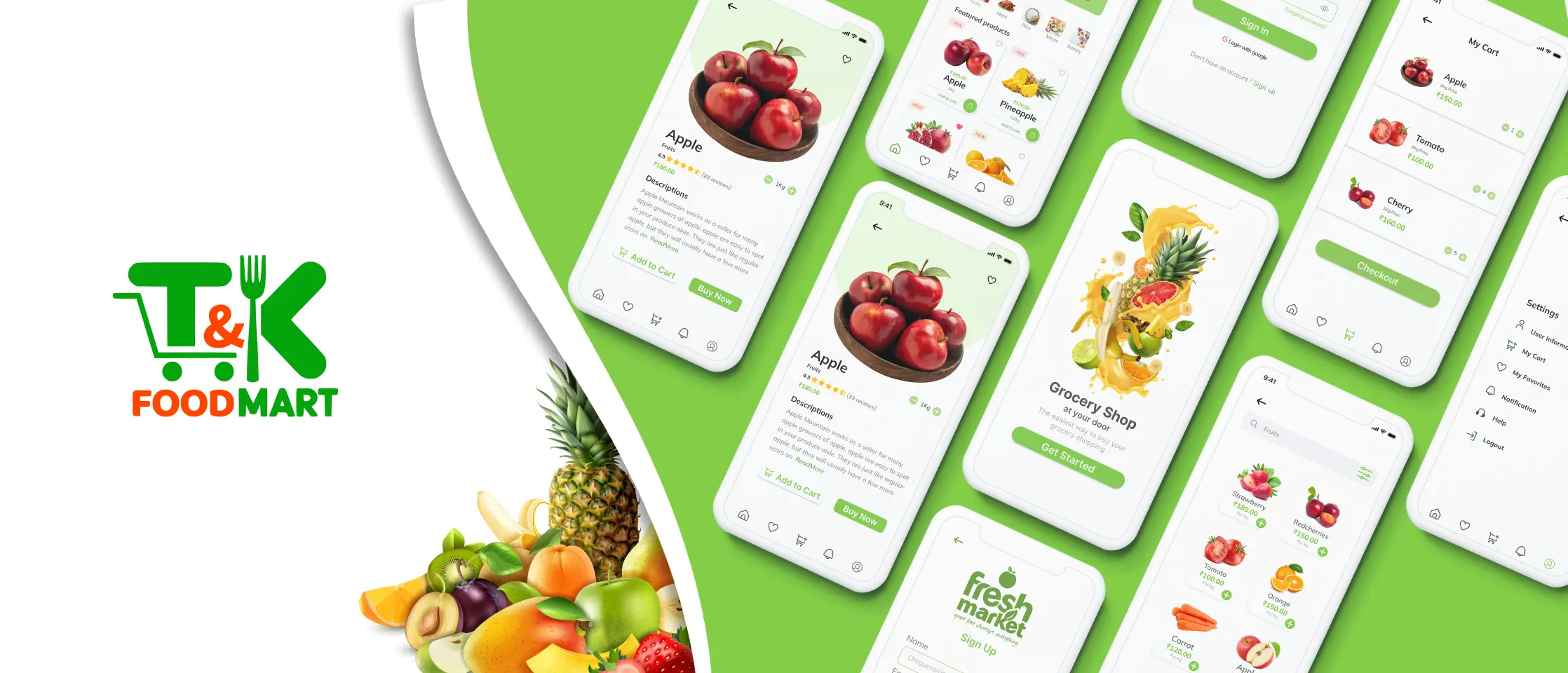
T & K — E-Commerce Platform
Cross-platform e-commerce solution built for scalability — web and mobile, inventory management, secure payments, and real-time analytics.
Read Case Study →Ready to build something exceptional?
Every project we take on is treated as if it were our own business. If you have an idea, a problem, or a deadline — let’s talk.