
Most fleet management software gets abandoned within 90 days of launch. Not because the backend crashed or the database corrupted, but because the drivers on the road quietly refused to use it.
Whenever founders reach out to us at NextGen wanting to replace an expensive off the shelf tool, the story is almost always identical. They invested twenty thousand dollars into a commercial fleet platform. Three months later, their dispatchers are still yelling across the room, drivers are sending screenshots over WhatsApp, and the expensive dashboard sits idle on an unvisited browser tab.
Getting field workers to trust software behind the wheel is where the entire return on investment is decided. Here is the operational blueprint we use to build logistics systems teams actually love using every day.
"A thirty second GPS latency gap makes dispatchers pick up their phones. Once dispatchers call, drivers stop opening the app. Real time latency is not a vanity metric, it is user adoption insurance."
1. Start With Your Dispatcher, Not Your Driver
Most founders make the instinctive mistake of designing the driver mobile application first. It feels like the physical product because people hold it in their hands. However, the true nervous system of any logistics operation is the dispatcher console.
Your dispatcher balances customer promises, driver delays, urgent reroutes, and vehicle breakdowns simultaneously. If their screen lags or requires clicking through nested tabs to assign a delivery, they will immediately abandon the tool and revert to phone calls.
A high performance dispatcher screen should answer one primary question within two seconds: Where are my active drivers right now, and which one is best positioned for the next pickup? Everything else must be secondary.
2. What Real Time Actually Means Under Heavy Load
When enterprise software sales teams claim real time tracking, they usually mean polling a SQL database every fifteen to thirty seconds. For long haul intercity freight, thirty seconds is acceptable. For urban on demand delivery or scheduled field service operations, a thirty second lag creates chaos.
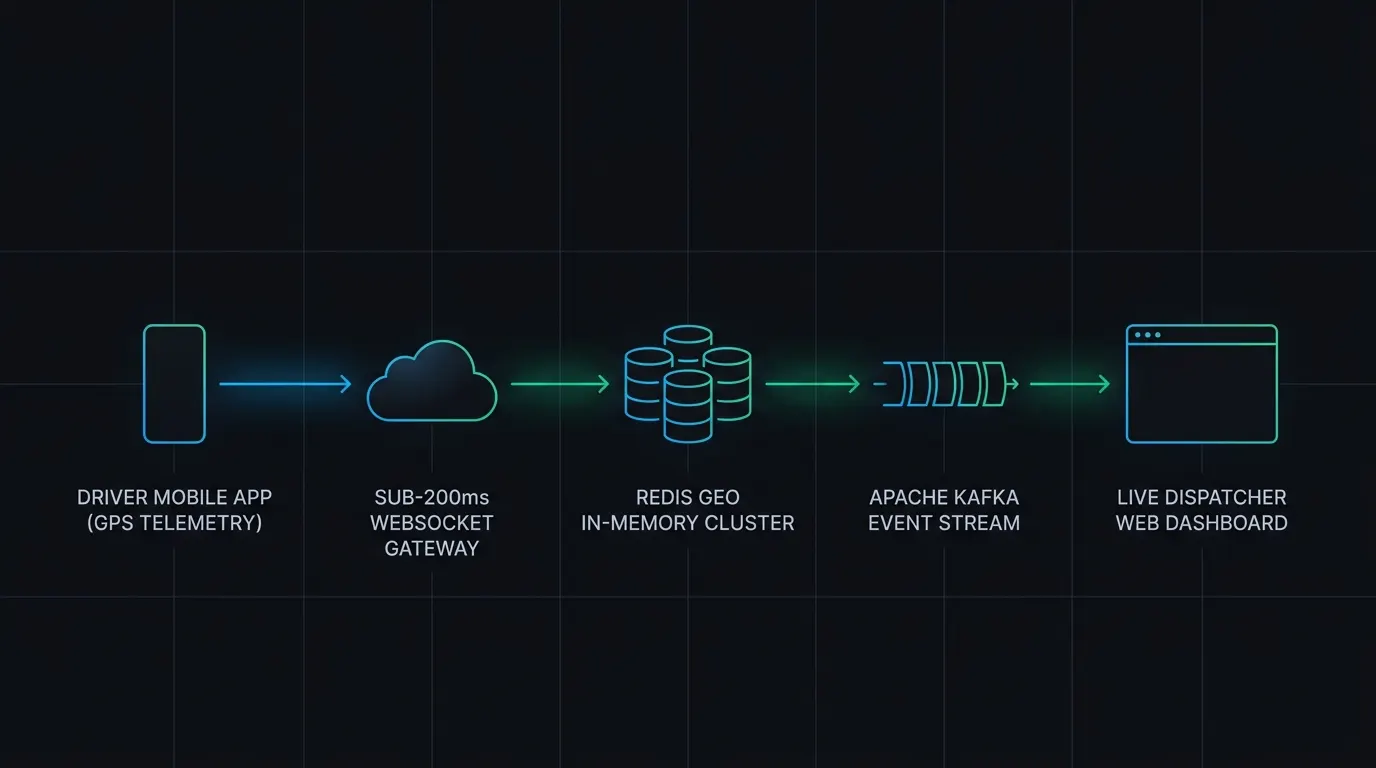
At NextGen, we implement Redis GEO clusters paired with lightweight persistent WebSockets. Driver location pings update memory indexes within under 200 milliseconds. When a driver turns a street corner in downtown Dubai or central London, the dispatcher sees the icon glide on the map almost simultaneously.
3. Driver Mobile UX: Simple, Clear, Frictionless
Drivers operate in high stress environments: heavy traffic, poor cellular coverage, low battery levels, and tight delivery windows. If your driver app requires tiny button taps or detailed multi step forms, drivers will make errors or ignore updates until the end of their shift.
Every critical driver action, accepting a dispatch, confirming cargo arrival, and capturing proof of delivery, must be executable with one thumb in three taps or fewer. Large tactile tap targets, high contrast visibility under direct sunlight, and audio feedback cues make all the difference.
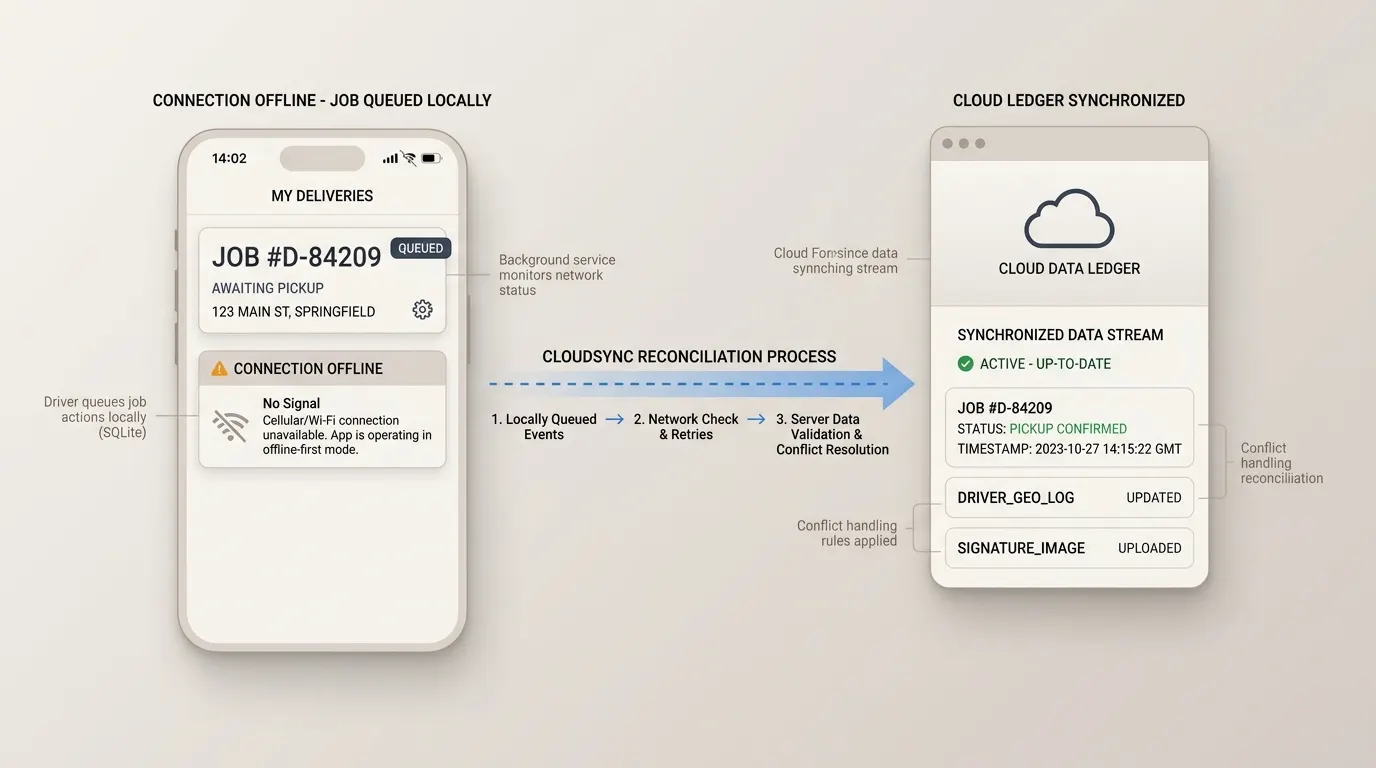
Offline resilience is essential. When drivers enter underground parking basements or remote industrial zones, the app continues queueing timestamps, geofence entries, and customer signatures locally on the device using encrypted SQLite storage. The second connectivity returns, the queue synchronizes transparently with the cloud.
4. Cloud Hosting: Own Your Own Infrastructure
Commercial off the shelf fleet SaaS tools charge steep per vehicle monthly licensing fees. More critically, they store your proprietary route data, customer locations, and driver performance records on their closed infrastructure.
NextGen deploys every system directly into your own AWS, Google Cloud, or DigitalOcean organization. We automate your infrastructure with Terraform and containerized Kubernetes clusters. You own 100% of your operational data, your source code repositories, and your intellectual property, which significantly enhances your company valuation when raising capital or pitching enterprise contracts.
5. The Personalized Production Pilot
Instead of locking founders into lengthy six month contracts with ambiguous milestones, we build a personalized production pilot tailored to your operations in 8 to 10 weeks. You receive customized driver mobile applications, live dispatcher web dashboards, verified cloud deployment, and full source code access.
You put the pilot into the hands of real drivers and real dispatchers on your actual routes. Once you see field adoption and concrete delivery efficiency, we scale the platform with complete confidence.